What Is a Mental Health Deductible and How Does It Work?
A mental health deductible is the amount you pay out of pocket for covered mental health services before your insurance starts sharing the cost. For most modern health plans, there is no separate “mental health deductible” — it’s the same deductible that applies to your medical care overall, thanks to federal parity requirements. Here’s how it actually works.
Why there’s usually just one deductible, not two
Before the Mental Health Parity and Addiction Equity Act, insurers could and often did apply separate, stricter financial rules to mental health care — a higher deductible, lower visit limits, higher copays. Parity law changed that: insurers generally can’t apply financial requirements or treatment limitations to mental health and substance use benefits that are more restrictive than what applies to medical/surgical benefits. In practice, this means your therapy sessions count toward, and are subject to, the same single deductible as your other medical care, not a separate mental-health-specific number.
How the deductible actually functions
Every dollar you spend on covered care — a primary care visit, an X-ray, a therapy session, a prescription in some plan designs — counts toward the same running total for the plan year. Once that total hits your deductible amount, your plan switches from “you pay full negotiated rate” to “you pay a copay or coinsurance percentage” for the rest of the year. Deductibles reset at the start of each new plan year, typically January 1st for most individual and employer plans, though some employer plans run on a different fiscal year.
High-deductible plans and therapy
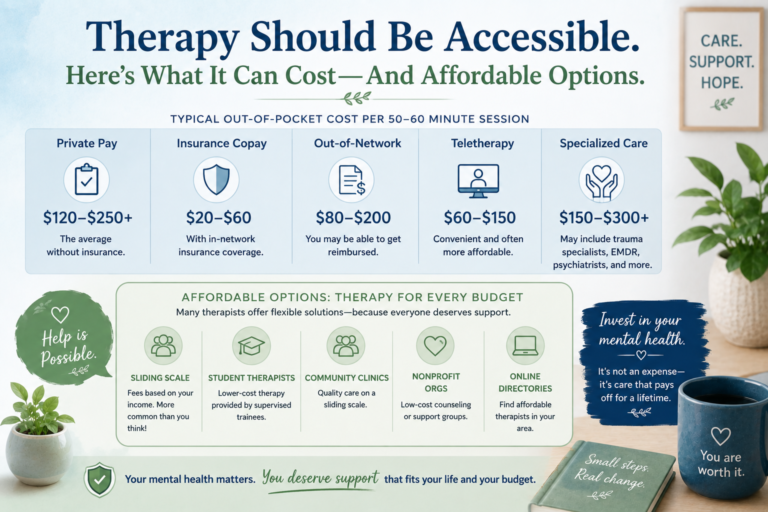
If you’re on a high-deductible health plan (HDHP), often paired with an HSA, your deductible might be $1,500-$8,000+ depending on the plan, meaning you could be paying full price for therapy sessions for a significant portion of the year before coverage kicks in. This is one of the most common reasons people are surprised that “having insurance” doesn’t mean cheap therapy from session one. An HSA lets you pay those pre-deductible sessions with pre-tax dollars, which softens the cost somewhat even though it doesn’t reduce the deductible itself.
What actually counts toward your mental health deductible
In-network services generally count at the negotiated rate. Out-of-network services, if your plan has out-of-network benefits at all, often accumulate toward a separate, usually higher out-of-network deductible — so seeing an out-of-network therapist may not help you meet your in-network deductible at all. Some plan documents spell this out clearly; others require a call to member services to confirm.
Checking your specific deductible status
Your insurer’s member portal typically shows your real-time deductible progress — how much you’ve paid toward it so far this year, and how much remains. This number is worth checking before booking new therapy, especially early in the plan year when you’re most likely to still be below it, so you’re not caught off guard by a bill that’s higher than you expected.
Deductible vs. out-of-pocket maximum
These are often confused but function differently: the deductible is the threshold where cost-sharing (copay/coinsurance) begins; the out-of-pocket maximum is the threshold where your cost-sharing ends entirely and the plan covers 100% of further covered care for the rest of the year. Both apply to mental health care exactly as they apply to any other covered medical care under parity law.