How Much Does Therapy Cost With Insurance? 2026 Breakdown
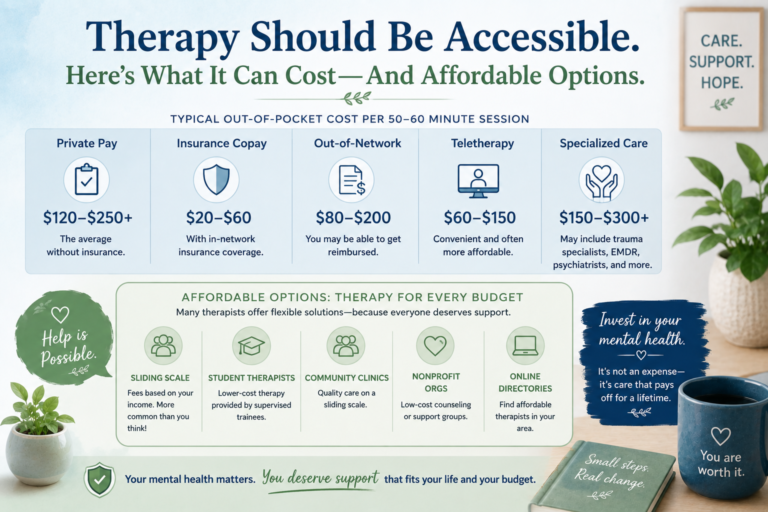
With insurance, therapy usually costs far less than the $100-$250 per session you’d pay out of pocket — but “far less” depends heavily on your specific plan design. Here’s what actually determines your cost, and how to figure out your number before you book a first session.
The four numbers that determine your cost
Your out-of-pocket cost for therapy comes down to four plan features working together: whether you’ve met your deductible, your copay or coinsurance percentage, whether the therapist is in-network, and your annual out-of-pocket maximum. Thanks to federal mental health parity law, insurers generally can’t apply stricter financial requirements to mental health visits than they apply to comparable medical/surgical visits — so your therapy copay should be in the same range as a specialist visit copay, not a separate, higher category.
Before you meet your deductible
If your plan has a deductible and you haven’t met it yet for the year, you typically pay the full negotiated (in-network) rate per session out of pocket — often $80-$150 depending on your insurer’s negotiated rate with that therapist, which is usually well below the therapist’s full cash rate. This is where a lot of people get an unpleasant surprise: “covered” doesn’t mean free until the deductible is satisfied.
After your deductible: copay vs. coinsurance
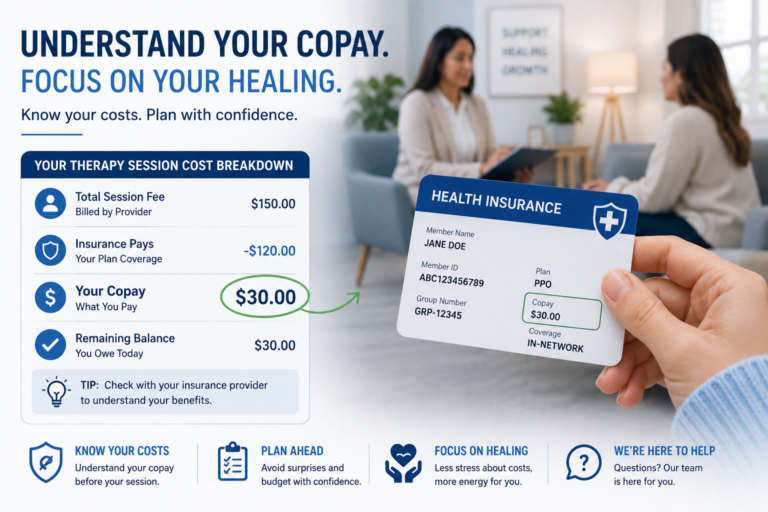
Once your deductible is met, most plans switch to either a flat copay (commonly $20-$50 per session for in-network mental health visits) or a coinsurance percentage (commonly 10-30% of the negotiated rate). Copay plans are more predictable; coinsurance plans mean your cost varies with the specific rate for each provider.
In-network vs. out-of-network
In-network therapists have a pre-negotiated rate with your insurer, and that rate — not the therapist’s full fee — is what your copay or coinsurance is calculated against. Out-of-network therapy is usually far more expensive out of pocket, though many PPO plans offer partial reimbursement after you submit a claim; see our guide on using out-of-network benefits for how that reimbursement process actually works.
How to find your actual number before booking
Call the member services number on the back of your insurance card and ask three specific questions: what is my mental health outpatient copay or coinsurance, have I met my deductible for the year, and is [therapist’s name] in-network. Get the representative’s name and a reference number for the call — insurance quotes are not binding, and having documentation matters if a claim comes back different than what you were told.
What if therapy still isn’t affordable
If your deductible is high enough that therapy is still out of reach even with insurance, options include an FSA or HSA to pay pre-tax (see our FSA guide), an employer EAP for a set number of free sessions first, or a sliding-scale or training-clinic therapist while you work toward your deductible.
A realistic cost example
Say your plan has a $1,500 deductible and 20% coinsurance after that, with a therapist whose negotiated in-network rate is $120 per session. Your first several sessions would cost you the full $120 each until your cumulative medical spending for the year (not just therapy — any covered care counts toward the deductible) reaches $1,500. After that, you’d pay 20% of $120, or $24 per session, for the rest of the plan year, until you hit your out-of-pocket maximum, after which covered care is free for the remainder of the year. This is why two people on seemingly similar-sounding insurance can have very different real therapy costs depending on what else they’ve spent on healthcare that year.
Group vs. individual therapy pricing
Group therapy sessions are typically billed at a lower rate than individual sessions and often carry a lower copay under the same plan, since the per-person cost to the provider is lower. If cost is the main barrier and your therapist offers a relevant group option, it’s worth asking whether it fits your situation — group CBT for anxiety or depression, for example, has solid evidence behind it and can be considerably cheaper.