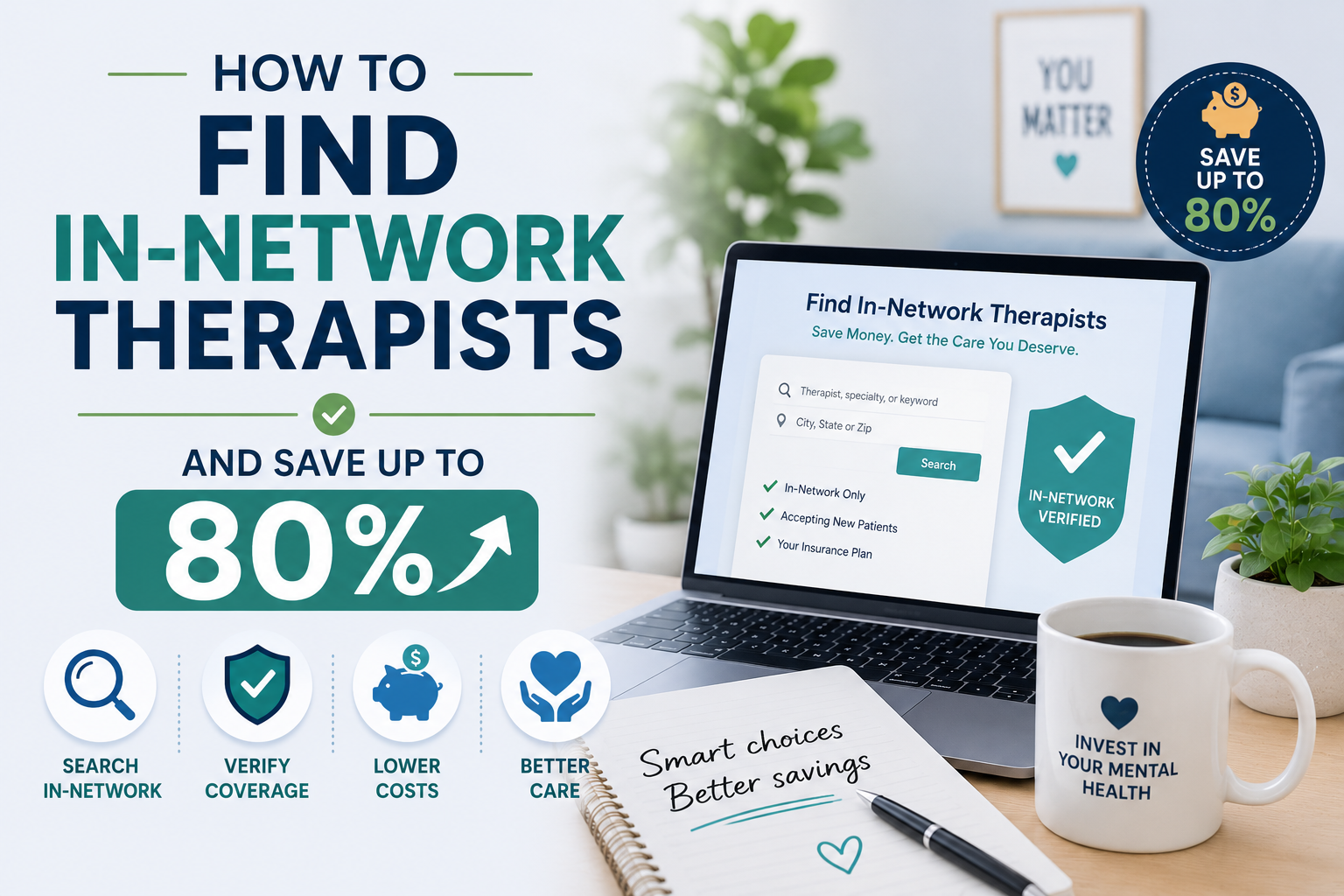
How to Find In-Network Therapists and Save Up to 80%
43% — Provider directory listings inaccurate for behavioral health (HHS 2022)
80% — Maximum savings choosing in-network vs paying out-of-network full rates
4–6 wks — Average wait time for first in-network therapy appointment (2024)
$30 — Typical in-network copay vs $150–$300 out-of-network full session cost
72% — Patients unaware they can request a network adequacy exception from insurer
Why In-Network Therapy Is Worth Finding
The math is stark: in-network therapy after your deductible might cost $30/session. Out-of-network with a private-pay therapist could be $200. Over 52 weekly sessions, that’s $8,840 more per year. Finding a real in-network therapist who is actually accepting patients can feel like a maze — this guide gives you the exact steps.
Step 1: Get the Right Info from Your Insurer First
Before any directory search, call member services and write down: What is my deductible for outpatient mental health? What is my copay or coinsurance after the deductible? Do I need a referral or prior authorization? What behavioral health network does my plan use (Optum, Magellan, Beacon, Cigna Behavioral Health)?
Document everything — rep’s name, call reference number. This protects you if claims are later disputed.
Step 2: Use Multiple Search Tools Simultaneously
Step 3: Beat the Ghost Network
A ghost network is when your insurer’s directory lists providers who no longer accept the plan, have moved, retired, or have 6-month waitlists. HHS found 43% of behavioral health directory listings were inaccurate in 2022. Fix: contact 8–10 therapists simultaneously. Ask each: ‘I have [plan name] — do you accept this specific plan, and are you currently taking new patients?’ Both questions are essential.
The Network Adequacy Exception
If you can’t find an available in-network therapist within a reasonable distance or timeframe, you’re legally entitled to a network adequacy exception. Call and say: ‘I’ve contacted [number] in-network therapists and none are available within [X] weeks. I’m requesting a network adequacy exception per your access standards.’ Get written authorization before booking any out-of-network session.
| Question to Ask Each Therapist | Why It Matters |
|---|---|
| Do you accept [specific plan name]? | In-network with insurer ≠ in-network with your specific plan |
| Are you taking new patients now? | Waitlists can be 2–6 months even for listed providers |
| Do you offer telehealth sessions? | Opens up statewide in-network options — huge advantage |
| Do you treat [my specific issue]? | Specialization significantly improves outcomes |
Telehealth Expands Your Options Dramatically
Enabling telehealth turns a 10-mile search radius into an entire state. Platforms like Headway and Alma built their entire model around insurance-billed telehealth and verify benefits before your first session to prevent surprise bills.
See: Does Insurance Cover Therapy? | Therapy Without Insurance: 7 Affordable Options
Frequently Asked Questions
How long does it take to get an in-network appointment?
Average 4–6 weeks. Contact 8–10 therapists simultaneously and ask about cancellation slots. Using telehealth dramatically shortens wait times.
What if every in-network therapist has a long waitlist?
Request a network adequacy exception. Document your attempts, then formally ask your insurer to authorize an out-of-network therapist at in-network rates.
Is Headway or BetterHelp better for insurance?
Headway — by far. Therapists on Headway directly bill your insurance. BetterHelp does not accept insurance at all. For insurance-billed therapy, use Headway, Alma, or Zocdoc.
Can I switch therapists after I start?
Always. The therapeutic relationship is the strongest predictor of good outcomes. It’s completely normal to try 2–3 therapists before finding the right fit.
LCSW vs LPC vs psychologist — what’s the difference?
LCSWs and LPCs provide talk therapy and are most commonly in-network. Psychologists (PhD/PsyD) do therapy and testing. Psychiatrists (MD) manage medication. All can be in-network; LCSWs/LPCs are most available.
Does using therapy benefits raise my premiums?
No — using mental health benefits does not raise individual premiums. Insurance pricing is based on aggregate plan-level data, not individual usage patterns.
Your Action Plan
Call your insurer (20 min). Contact 10 therapists simultaneously on Headway and Psychology Today. Book the first available appointment. With parallel outreach, most people secure their first appointment within 1–2 weeks.