
How to Read Your Mental Health Explanation of Benefits (EOB) — Plain English Guide
Your Explanation of Benefits — or EOB — is one of the most confusing documents in American healthcare. It arrives after every insurance claim, looks like a bill but says “This is not a bill” and contains numbers that rarely seem to add up clearly.
This plain English guide walks you through every section of a mental health EOB so you understand exactly what happened with your claim.
What Is an EOB?
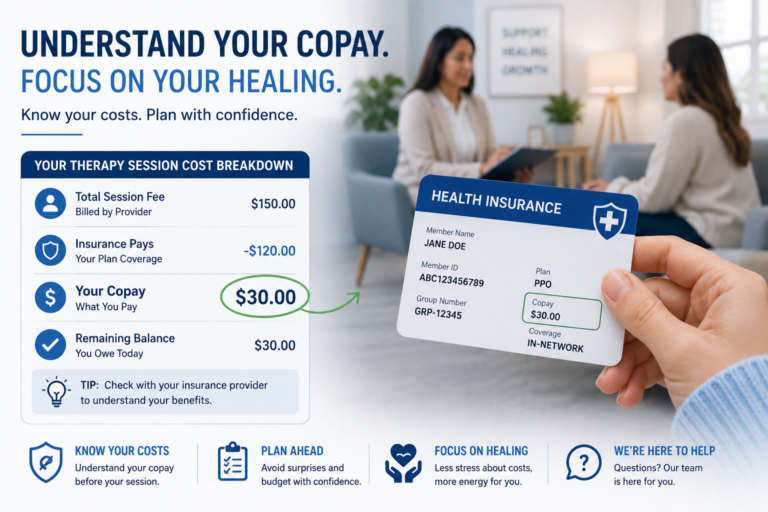
An Explanation of Benefits is a statement from your insurance company showing how a claim was processed. It is not a bill — it is an explanation of what your insurance paid and what you owe your provider.
You receive an EOB for every claim submitted by a covered provider. For ongoing weekly therapy, you receive an EOB for each session claim.
The Key Sections of a Mental Health EOB
- Patient and Provider Information
At the top: your name, insurance ID, the provider name (your therapist or facility) and the date of service. Verify these are accurate — errors here can cause claim processing problems. - Service Description
A brief description of the service billed — often just a CPT code number. Common mental health CPT codes:
- 90834: 45-minute individual therapy session
- 90837: 60-minute individual therapy session
- 90847: Family therapy with patient present
- 90853: Group therapy
- 99213 or 99214: Psychiatric medication management
- Amount Billed
The full amount your therapist charged. This is the starting point — not what you actually owe. - Not Covered Amount
Any amount the insurance company is not covering — due to the service being non-covered, out of network, or not meeting medical necessity criteria. If this is non-zero when you expected coverage, investigate. - Discount or Contractual Adjustment
The reduction applied because of your insurance company’s negotiated rate with the provider. Your in-network therapist has agreed to accept this lower amount. This is written off — neither you nor insurance pays this portion. - Plan Paid
What your insurance actually paid after applying your deductible and cost-sharing. - Member Responsibility
What you owe. This is the most important number — it should match what you are asked to pay by your therapist.
Why the Numbers Might Not Match Your Expectations
Deductible not met: If you have not met your annual deductible, the member responsibility may be the full allowed amount rather than just a copay.
Out-of-network processing: If your therapist is out of network, different rates and deductibles apply — resulting in higher member responsibility.
Claim denial: If the claim was denied, the member responsibility may equal the full billed amount. The EOB will include a reason code explaining the denial.
How to Read Denial Reason Codes
Every denial or adjustment includes a reason code — a brief code and description explaining why the adjustment was made. Look these up if they are unclear — your insurer’s member portal usually has a key.
Common mental health reason codes:
- PR-1: Deductible amount
- PR-2: Coinsurance amount
- CO-97: Benefit for this service is included in the payment for another service
- CO-4: Service inconsistent with the procedure code
What to Do If Your EOB Shows an Error
Compare your EOB to your therapist’s bill — they should match in terms of dates, service descriptions and your responsibility amount.
If there is a discrepancy:
- Call your insurer’s member services — explain the discrepancy and ask for clarification
- Contact your therapist’s billing department — they can resubmit a claim if a coding error occurred
- File a formal appeal if the EOB shows a denial you believe is incorrect
Frequently Asked Questions
Do I get an EOB for every therapy session?
Yes — you should receive an EOB for each claim submitted by your in-network therapist. For frequent sessions, EOBs arrive regularly. You can typically view all EOBs in your insurer’s online member portal.
What if my EOB shows I owe more than my usual copay?
This commonly happens when your deductible has not been fully met. Check your deductible progress in your insurer’s member portal. If you believe the processing is wrong, call member services with your EOB reference number.
How long should I keep my EOBs?
Keep EOBs for at least 1 year in case of billing disputes. For tax purposes (if using HSA or FSA funds), keep records for at least 3 years.
Medical Disclaimer: Information on TherapyInsuranceGuide.com is for educational purposes only. Insurance processing varies by plan — always contact your insurer directly for help understanding your specific EOB.