How to Use FSA for Therapy: Complete Guide to Mental Health HSA/FSA Benefits
Flexible Spending Accounts (FSAs) and Health Savings Accounts (HSAs) are powerful but underused tools for reducing therapy costs. Because contributions are made with pre-tax dollars, using an FSA or HSA for therapy effectively gives you a 20–35% discount depending on your tax bracket. This guide explains exactly how FSA and HSA benefits apply to therapy and mental health expenses, and how to make the most of them.
Are Therapy and Mental Health Services FSA/HSA Eligible?
Yes. The IRS classifies therapy and mental health services as qualified medical expenses eligible for FSA and HSA payment. This includes:
- ✅ Individual therapy (psychotherapy, talk therapy, counseling)
- ✅ Group therapy
- ✅ Psychiatric evaluation and medication management
- ✅ Substance use disorder treatment
- ✅ Intensive outpatient programs (IOP)
- ✅ Mental health inpatient care
- ✅ Prescribed mental health apps and digital therapeutics
NOT FSA/HSA eligible:
- ❌ General wellness coaching without a mental health diagnosis
- ❌ Meditation apps without a prescription (some exceptions with Letter of Medical Necessity)
- ❌ BetterHelp (as of 2026 — the platform does not accept FSA/HSA cards)
FSA vs HSA: Key Differences for Therapy
| Feature | FSA | HSA |
|---|---|---|
| Who can have it | Employer must offer it | Must have HDHP insurance |
| 2026 contribution limit | $3,300/individual | $4,300 individual / $8,550 family |
| Rolls over | Limited ($660 max rollover) | Yes — full rollover, forever |
| Funds available | Full amount day 1 | As contributed |
| Therapy eligible | ✅ Yes | ✅ Yes |
How to Pay for Therapy With FSA/HSA
Method 1: Direct Payment (Easiest)
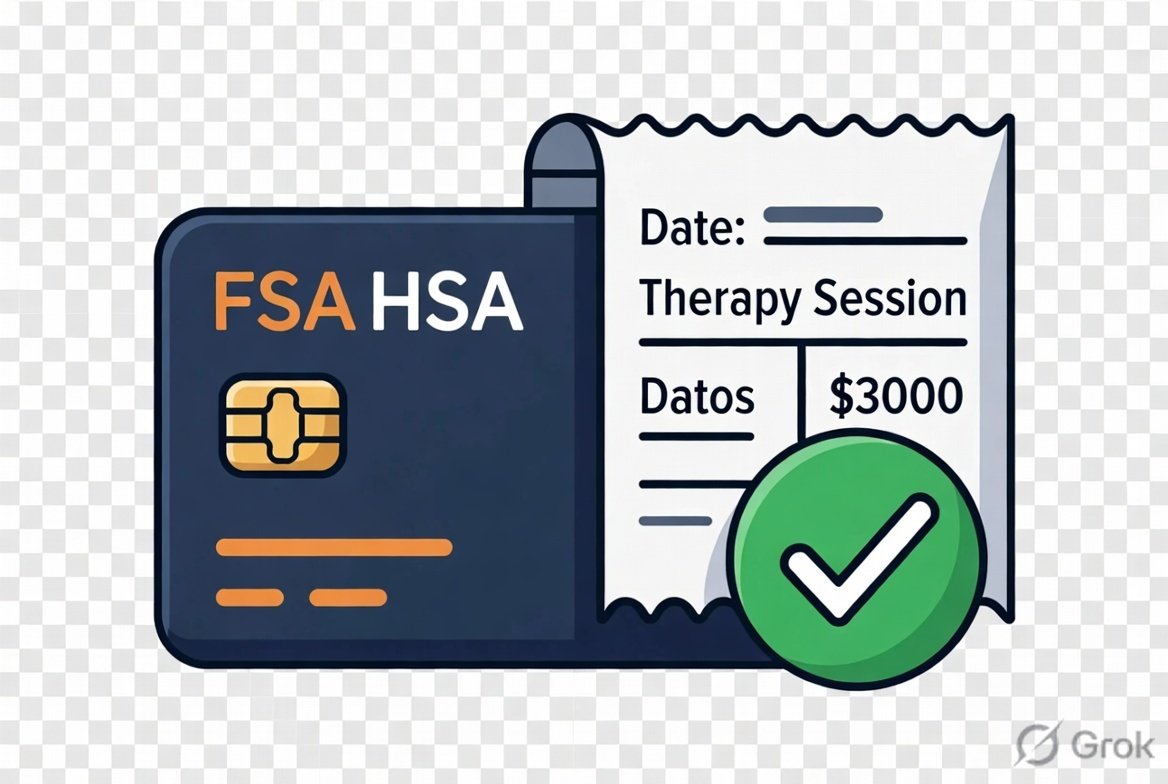
Many therapy practices and all insurance-accepting online therapy platforms accept FSA/HSA cards directly. Pay for therapy the same way you’d pay with a regular debit card. The transaction processes as an eligible medical expense. Keep your receipt in case your FSA administrator requests documentation.
Method 2: Reimbursement with Superbill
If your therapist doesn’t accept FSA/HSA cards directly, pay out-of-pocket and request a superbill — a detailed itemized receipt that includes the therapist’s NPI number, CPT procedure codes, ICD-10 diagnosis codes, date and amount of service, and payment received. Submit this to your FSA/HSA administrator through their portal or app for reimbursement within 1–5 business days.
Method 3: Pay Insurance Copays with FSA/HSA
If you’re using insurance for therapy, your copay is also FSA/HSA eligible. Pay your therapy copay with your FSA/HSA card at each session. This reduces your after-tax cost of copays with no additional paperwork.
Online Therapy Platforms That Accept FSA/HSA
- ✅ Talkspace — FSA/HSA accepted directly
- ✅ Brightside — FSA/HSA accepted
- ✅ Cerebral — FSA/HSA accepted
- ✅ Grow Therapy — FSA/HSA accepted
- ✅ Doctor on Demand — FSA/HSA accepted
- ❌ BetterHelp — does NOT accept FSA/HSA (2026)
See our full comparison of online therapy that takes insurance for platforms that combine insurance coverage with FSA/HSA acceptance.
Maximizing Your FSA for Therapy
If you know you’ll be in therapy during the year, fund your FSA strategically. For weekly therapy at $30 copay, that’s $1,560/year — consider contributing at least this amount to your FSA to pay it pre-tax. FSA funds are available from day one of the plan year even if you haven’t yet contributed the full amount, making them particularly useful for front-loading therapy costs in January.
HSA strategy is even more powerful: contribute the maximum allowed annually, invest the HSA funds in index funds, let them grow tax-free, and use them for therapy and other qualified medical expenses throughout your life. The HSA is effectively a triple-tax-advantaged account for medical expenses including mental health.
Letter of Medical Necessity for Non-Standard Uses
Some wellness and mental health products are FSA/HSA eligible with a Letter of Medical Necessity (LMN) from your healthcare provider. Examples: certain meditation apps, mental health journals, some wearable anxiety devices. Ask your therapist or psychiatrist if any tools they recommend qualify for FSA/HSA coverage with an LMN.
Frequently Asked Questions
Can I use FSA for a therapist who doesn’t take my insurance?
Yes — FSA/HSA eligibility is independent of insurance. Whether your therapist takes insurance or not, you can pay with FSA/HSA funds or get reimbursed via superbill. This makes out-of-network therapy significantly more affordable.
What if I can’t get a superbill from my therapist?
Any licensed therapist can provide a superbill — it’s a standard billing document. If a therapist declines to provide one, ask for an itemized receipt including their NPI number, diagnosis codes, and procedure codes. If they still won’t provide documentation, most FSA administrators will accept a dated receipt with provider name and amount as minimum documentation for therapy reimbursement.
Can I use FSA for couples therapy?
Yes — couples therapy is FSA/HSA eligible when provided by a licensed therapist for a diagnosed mental health condition. Couples therapy for relationship enrichment without a diagnosis may not qualify. Ask your therapist to code the session appropriately.