How Much Does Therapy Cost Without Insurance? Complete 2026 Guide to Affordable Options
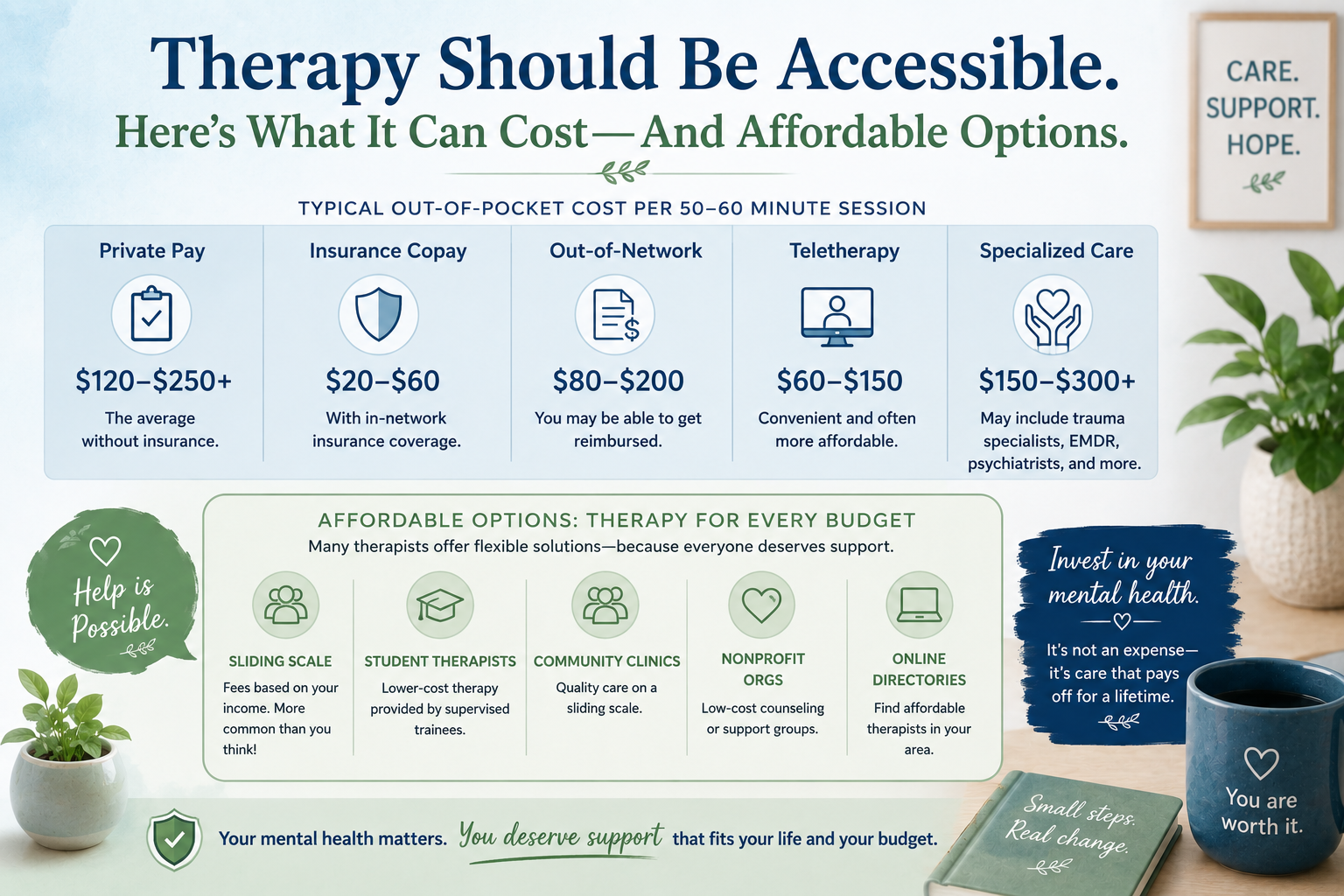
The cost of therapy without insurance is one of the most significant barriers to mental health care in the United States. Standard private practice therapy rates range from $100 to $300 or more per session in most metropolitan areas, making weekly therapy a $400 to $1,200 monthly expense that most people without insurance simply cannot afford. But the full range of therapy options extends far beyond private practice rates — from genuinely free options through community resources to affordable sliding scale practices. This guide covers every tier of the therapy cost spectrum without insurance.
Disclaimer: Costs and program availability vary by location and change over time. Always verify current pricing directly with providers.
Why Therapy Costs Vary So Dramatically
The wide range in therapy costs reflects differences in provider credentials, geographic location, practice setting, specialization, and whether the therapist accepts insurance. A licensed clinical social worker in a rural area may charge $80 per session. A licensed psychologist specializing in complex trauma in a major city may charge $300. Both are providing legitimate, licensed mental health care — the price difference reflects market factors rather than quality differences that can be determined from price alone.
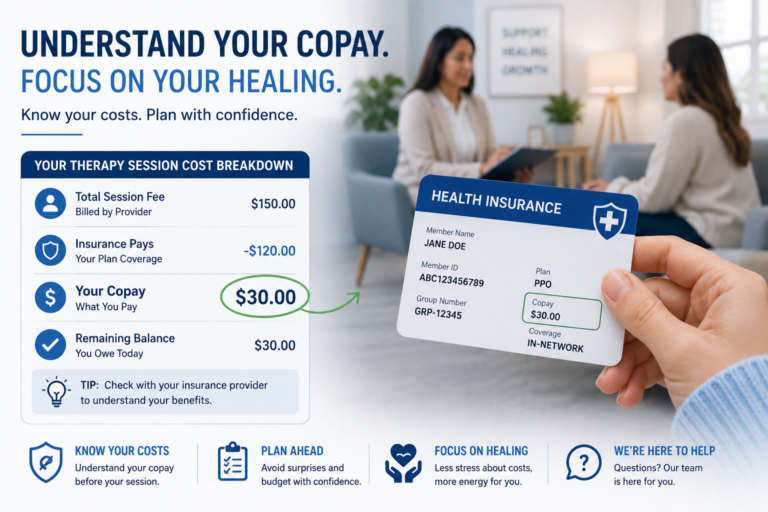
Understanding these variables helps you identify where in the cost spectrum a therapist appropriate for your needs and budget might exist. If you do have insurance and want to understand how to use it for mental health care, see our guides on How to Find a Therapist That Takes Your Insurance and What is a Therapy Copay and How Does It Work.
Free Therapy Options
Genuinely free therapy options exist for those who qualify or who are in specific circumstances.
Community mental health centers receive government funding to provide services on a sliding scale — including free services for those with no income. Every county in the United States has at least one community mental health center. Call 211 (the nationwide social services information line) to find the community mental health center nearest you.
University and college training clinics provide therapy conducted by supervised graduate students in psychology, social work, and counseling. These sessions are typically free or offered at a nominal fee. The therapists are supervised by licensed professionals and the quality of care is generally good. Search “[your city] university counseling training clinic” to find options.
The 988 Suicide and Crisis Lifeline provides free, confidential crisis counseling 24 hours a day. While not ongoing therapy, crisis services provide immediate support and can connect you with longer-term affordable resources.
NAMI (National Alliance on Mental Illness) provides free peer support groups and educational programs for people with mental illness and their families. Peer support is not therapy but provides meaningful community and coping support at no cost.
Low Cost Therapy — Under $50 Per Session
Several options make therapy genuinely affordable even without insurance at under $50 per session.
Open Path Collective is a network of therapists offering sessions at $30 to $80 for individuals and families in financial need. Membership costs a one-time fee of $65 and provides access to their therapist network. This is one of the most practical affordable therapy options for people without insurance who are not in acute crisis.
Many private practice therapists offer sliding scale fees — charging less to clients who cannot afford standard rates. The sliding scale is typically based on your income and is negotiated directly with the therapist. Simply ask any therapist you are considering: “Do you offer sliding scale fees based on income?” Many do but do not advertise it prominently.
Federally Qualified Health Centers (FQHCs) provide mental health services alongside medical care on a sliding scale based on income. Find FQHCs near you at findahealthcenter.hrsa.gov.
Online Therapy Platforms — Cost Comparison Without Insurance
Online therapy platforms have created a new tier of mental health care that is typically more affordable than private practice in-person therapy, though less affordable than community resources.
BetterHelp offers unlimited messaging and weekly live sessions (video, phone, or chat) for approximately $60 to $100 per week depending on location and therapist availability. Financial aid is available for those who qualify. The subscription model provides more contact with a therapist than weekly individual sessions would at typical out-of-pocket rates.
Talkspace offers similar subscription-based therapy with various communication formats at comparable price points. Both platforms have expanded their insurance coverage in recent years — check whether your employer’s benefits include a subscription to either platform before paying out of pocket.
For out of network reimbursement options if you have insurance with out of network benefits, see our guide on How to Use Out of Network Therapy Benefits.
Group Therapy — High Value at Lower Cost
Group therapy is significantly less expensive than individual therapy — typically $30 to $80 per session — while providing meaningful therapeutic benefit for many conditions. Research shows group therapy is highly effective for depression, anxiety, grief, addiction, and many other conditions.
Many community mental health centers, nonprofit organizations, and private practices offer group therapy programs. The combination of professional facilitation and peer support creates a therapeutic environment that is different from individual therapy but genuinely valuable for many people.
Employee Assistance Programs — Often Overlooked
If you are employed, your employer almost certainly offers an Employee Assistance Program that provides free short-term therapy — typically 3 to 8 sessions per year — at no cost to employees. EAP counseling is completely confidential from your employer and covers a wide range of mental health concerns.
Many people do not know their EAP exists or forget they have this benefit. Call your HR department and ask whether you have an EAP and how to access it. This benefit costs you nothing and can provide immediate access to professional counseling.
Frequently Asked Questions About Therapy Costs Without Insurance
Is cheaper therapy less effective? Not necessarily. The therapeutic relationship quality and the therapist’s skill are more predictive of outcomes than price. University training clinic therapists under supervision provide genuine therapeutic benefit. Community mental health center therapists are fully licensed professionals.
How do I ask a therapist about sliding scale without embarrassment? Simply and directly: “I am interested in working with you but I am concerned about the cost. Do you offer sliding scale fees based on income?” Most therapists appreciate directness and those who offer sliding scale are accustomed to this conversation.
Are online therapy platforms as effective as in-person? Research consistently shows comparable outcomes for most conditions. In-person therapy may be preferred for severe conditions, trauma work, or when the physical presence of a therapist matters therapeutically.
Conclusion
The cost of therapy without insurance ranges from free community resources to $300 or more for private practice specialists — but the right option for your needs likely exists at a cost you can manage. Start with your employer’s EAP if employed, explore community mental health centers and university training clinics for free or very low cost options, consider Open Path Collective and sliding scale therapists for affordable private practice options, and look at online platforms for convenient mid-range pricing. Mental health care is too important to avoid because of cost when accessible options exist at every price point. For insurance-related options, see our guides on How to Find a Therapist That Takes Your Insurance and Telehealth Therapy and Insurance Coverage.