
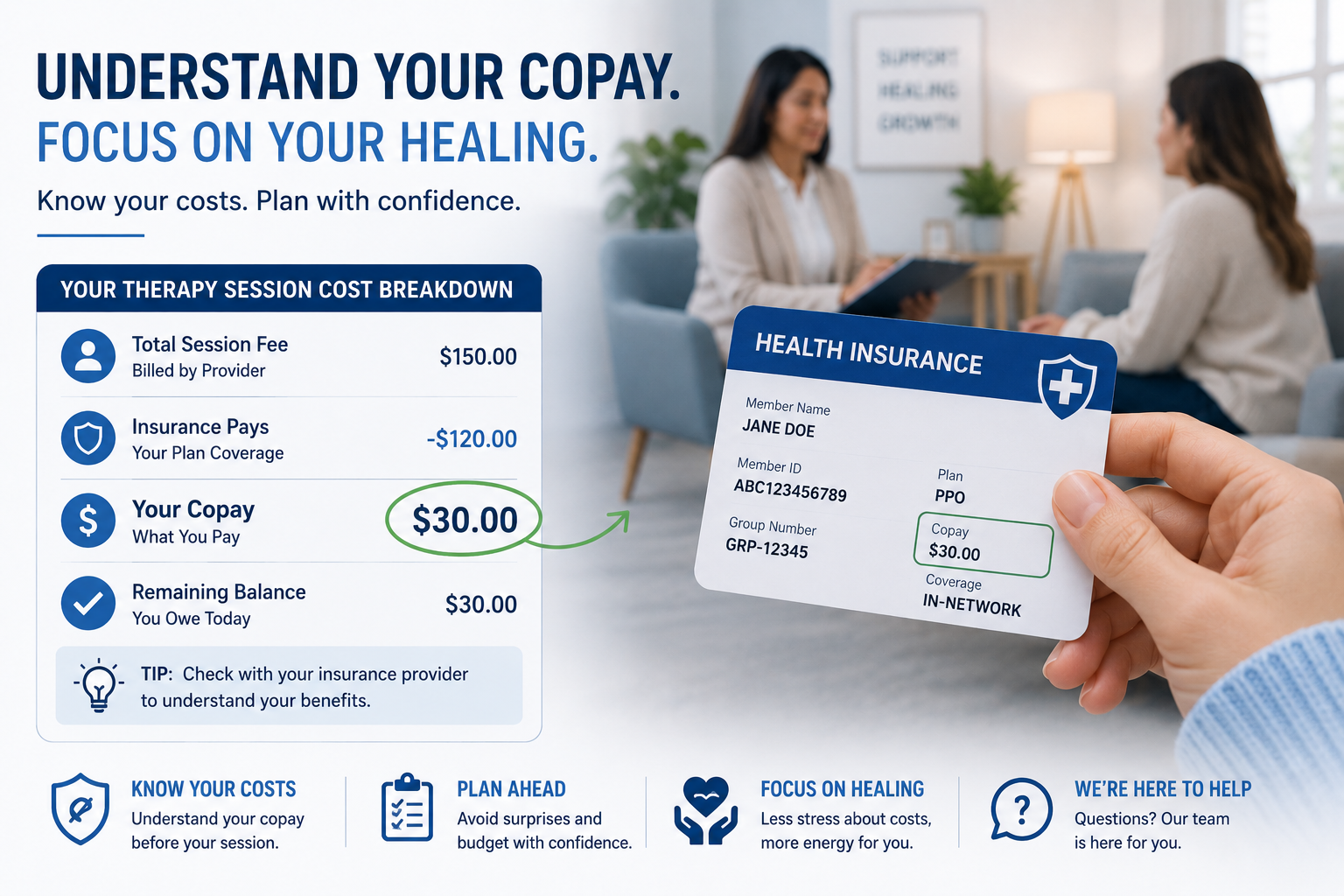
What is a Therapy Copay and How Does It Work?
A therapy copay is the fixed dollar amount you pay for each therapy session once your deductible (if your plan has one) has been met, with your insurance covering the rest. It’s one of the most common ways mental health visits are billed, alongside coinsurance. Here’s exactly how it works and what determines the amount.
Copay vs. coinsurance
A copay is a flat fee — say, $30 per session — regardless of what the therapist’s negotiated rate actually is. Coinsurance is a percentage instead — say, 20% of the negotiated rate — meaning your cost varies session to session depending on that provider’s specific rate. Most employer-sponsored PPO and HMO plans use a copay structure for outpatient mental health visits; high-deductible plans more often use coinsurance once the deductible is met. Your plan’s Summary of Benefits and Coverage document will state which applies and the exact amount.
Why your therapy copay should match your other specialist copays
Under federal mental health parity law, insurers can’t set a higher copay for mental health visits than they charge for comparable medical/surgical specialist visits. If your plan’s general specialist copay is $40, your in-network therapy copay should be in that same range, not a separate, higher “behavioral health” tier — a distinction that used to be legal before parity rules and occasionally still shows up as a compliance issue worth flagging to your insurer or state regulator if you notice it.
Does the copay apply before the deductible?
Not always — this is one of the more commonly misunderstood parts of plan design. Many plans require you to meet your deductible first, paying the full negotiated rate per session, before the copay structure kicks in. Some plans, however, exempt certain services (sometimes including primary care or mental health visits) from the deductible entirely, applying the copay from the very first visit. The only reliable way to know which applies to your plan is to check your Summary of Benefits and Coverage or call member services directly.
In-network vs. out-of-network copays
Copay amounts published by your insurer apply to in-network providers. Out-of-network therapy, if covered at all, is usually reimbursed differently — often as a percentage of an “allowed amount” after you submit a claim, rather than a simple flat copay — so don’t assume your published copay applies if you’re seeing someone out-of-network.
Does your copay count toward your out-of-pocket maximum?
Yes — copays for covered, in-network care count toward your annual out-of-pocket maximum, the point at which your plan covers 100% of further covered costs for the rest of the plan year. This means consistent weekly therapy, even at a modest copay, can meaningfully contribute toward hitting that maximum over the course of a year, especially if you’re also managing other ongoing medical costs.
What to do if you’re charged the wrong amount
If a therapist’s office charges you more than your stated copay, that’s worth double-checking — it could mean the visit was billed as something other than a standard covered session (a longer evaluation code, for instance), the provider turned out to be out-of-network, or there’s a billing error. Your insurer’s explanation of benefits (EOB) after each visit will show exactly what was billed and what you should have owed; see our EOB guide for how to read it.
How Copays Fit Into Your Costs
A copay is a fixed amount you pay per visit, usually at the time of service, and it may apply only after you meet your deductible depending on the plan. Check your plan’s summary of benefits for the specific amount for outpatient mental health visits and whether it differs between in-network and out-of-network providers. Keep receipts, since they can help if a billing mistake occurs.
Ways to Lower Your Costs
Choose in-network providers when possible, ask whether telehealth visits carry a lower copay, and see whether an employer assistance program offers free sessions. If you pay out of pocket, ask about sliding-scale rates.
Frequently Asked Questions
Do copays count toward my deductible? It depends on the plan.
Why was I billed more than my copay? The provider may have billed for services beyond the visit or your deductible may apply.
Can I dispute a bill? Yes, start by asking for an itemized statement.
This article is general information about insurance and is not medical, legal, or financial advice. Coverage varies by plan and state, so confirm details with your insurer.