
Telehealth Therapy and Insurance: What Is Covered in 2026 and How to Access It
Telehealth therapy has transformed mental health care access — making it possible to see a licensed therapist from your home, your office, or anywhere with a private internet connection. The expansion of insurance coverage for telehealth therapy since 2020 has made this convenience genuinely affordable for most insured patients. In 2026, understanding your telehealth therapy coverage is as important as understanding your in-person coverage — and for many patients, telehealth has become their primary mode of mental health care. This guide covers everything you need to know.
Disclaimer: Coverage varies significantly by insurance plan, state, and provider. Always verify your specific benefits before beginning telehealth therapy services.
The State of Telehealth Therapy Coverage in 2026
The COVID-19 pandemic forced rapid expansion of telehealth coverage that has largely been maintained and codified in the years since. As of 2026, most major private health insurance plans cover telehealth mental health services, though the specific terms — copay amounts, covered platforms, provider requirements — vary considerably by plan.
Federal law has established baseline telehealth coverage requirements that apply to many insurance plans. Medicare and Medicaid have made many of their pandemic-era telehealth expansions permanent. Most large employer-sponsored health plans cover telehealth therapy. Individual marketplace plans typically cover telehealth. The question for most patients is not whether telehealth is covered but what the specific terms of coverage are for their particular plan.
What Types of Telehealth Therapy Are Typically Covered
Most insurance plans that cover telehealth therapy cover video sessions with licensed therapists conducted through HIPAA-compliant video platforms. This includes individual therapy sessions, couples or family therapy in some plans, and psychiatry appointments for medication management.
Audio-only (phone) therapy sessions have more variable coverage. Some plans cover phone sessions at the same rate as video sessions. Others cover phone sessions at a lower rate or require video for full coverage. Text-based therapy platforms have the least consistent coverage — some plans cover them as a supplementary benefit, but many plans do not cover text-only therapy as a primary mental health benefit.
Group therapy via telehealth is covered by some plans, particularly for specific conditions like substance use disorders, but group telehealth coverage is less universal than individual session coverage. Read our guide on How to Find a Therapist That Takes Your Insurance for guidance on verifying coverage for any therapy format.
How Much Does Telehealth Therapy Cost With Insurance?
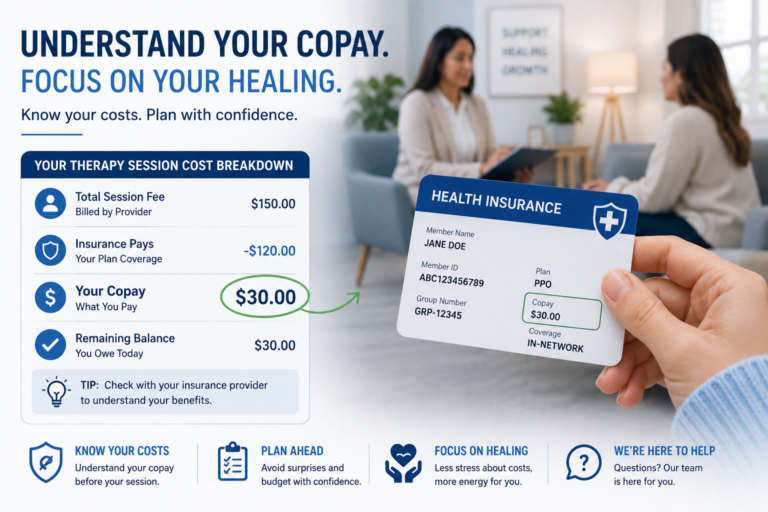
In most insurance plans, telehealth mental health sessions have the same copay or coinsurance as in-person mental health sessions following mental health parity requirements. If your in-person therapy copay is $30, your telehealth therapy copay should also be $30.
Some plans offer a reduced copay for telehealth visits as an incentive for patients to use lower-cost telehealth instead of in-person care. You may actually pay less for telehealth therapy than in-person therapy with the same therapist on the same insurance plan.
Deductibles and out-of-pocket maximums apply to telehealth services in the same way as in-person care for most plans. Read our guide on What is a Therapy Copay and How Does It Work for a complete explanation of how these cost-sharing mechanisms work.
Questions to Ask Your Insurance About Telehealth Coverage
Call your insurance company before beginning telehealth therapy and ask these specific questions. Does my plan cover telehealth mental health services? Is the copay or coinsurance the same as in-person mental health visits? Are there any platform restrictions — must I use a specific app or website? Does the telehealth provider need to be in-network? Are phone-only sessions covered or is video required? Are there any session limits specific to telehealth that differ from in-person limits?
Particularly important is the platform restriction question. Some insurance plans only cover telehealth services delivered through specific partner platforms, while others cover any HIPAA-compliant telehealth session with an in-network provider regardless of the platform used.
Best Telehealth Therapy Platforms That Accept Insurance in 2026
Several major telehealth therapy platforms have built extensive insurance networks that make finding covered care straightforward.
Teladoc Health is one of the largest telehealth platforms and accepts many major insurance plans through employer benefits. Their mental health services cover therapy and psychiatry. Check whether your employer’s benefits include Teladoc coverage before paying out of pocket.
Talkspace has built insurance partnerships with several major carriers and offers a straightforward insurance verification tool on their website. Their coverage varies by state and insurance plan.
Rula (formerly Path) specializes in insurance-covered telehealth therapy and has one of the most straightforward insurance verification processes. Their network focuses on therapists who accept a wide range of insurance plans.
Many traditional in-person therapists now offer telehealth sessions in addition to in-person visits. An in-network therapist you found through your insurance directory may offer telehealth as a scheduling option — ask when making your appointment.
How to Find In-Network Telehealth Therapists
Finding an in-network telehealth therapist follows a similar process to finding in-person in-network care, with a few additional filters. Start with your insurance company’s online provider directory and look for a telehealth filter option — most major insurer directories now have a way to filter for providers who offer telehealth services.
Psychology Today’s therapist finder at psychologytoday.com/us/therapists allows you to filter by insurance accepted and telehealth availability, making it a useful complement to your insurer’s directory. Always verify insurance acceptance directly with any therapist before booking your first appointment, as directories can be outdated.
Telehealth Therapy Without Insurance — Affordable Options
If you do not have insurance coverage for telehealth therapy, there are still affordable options. Open Path Collective connects patients with therapists offering sessions at $30 to $80 for those in financial need. Many telehealth platforms offer sliding scale fees. Community mental health centers in most areas offer telehealth options at reduced rates based on income.
For a complete guide to mental health care options without insurance, see our guide on How Much Does Therapy Cost Without Insurance.
Telehealth Therapy Best Practices — Getting the Most From Online Sessions
Telehealth therapy is most effective when you create conditions that replicate the privacy and focus of an in-person session. Find a private space where you cannot be overheard. Use headphones for better audio quality and greater privacy. Test your technology before sessions to avoid spending session time on technical problems. Treat telehealth sessions with the same preparation and engagement as in-person sessions — the therapeutic work is the same regardless of the medium.
Frequently Asked Questions About Telehealth Therapy Insurance
Is telehealth therapy as effective as in-person therapy? Research consistently shows that telehealth therapy produces outcomes comparable to in-person therapy for most mental health conditions. The therapeutic relationship and the quality of the therapist matter far more than the delivery medium.
Can I switch between telehealth and in-person sessions with the same therapist? Many therapists offer both formats. Check with your specific therapist and verify that your insurance covers both formats at the same copay.
Do I need to be in the same state as my telehealth therapist? Generally yes. Therapist licenses are state-specific and most therapists can only practice in states where they are licensed. Some telehealth platforms have multi-state licensed therapists, but this is still the exception rather than the rule.
Conclusion
Telehealth therapy coverage in 2026 is more comprehensive and accessible than at any previous point. Most insured patients can access video therapy sessions at their standard mental health copay with in-network providers. Understanding your specific plan’s telehealth benefits, finding in-network telehealth providers, and setting up an effective home therapy environment are the practical steps to access this convenient and covered care. Read our complete guides on How to Find a Therapist That Takes Your Insurance and How to Use Out of Network Therapy Benefits to explore all your mental health coverage options.