Therapy for Anxiety: What Type Works Best and How to Get Started
Anxiety is the most common mental health condition in the United States, affecting more than 40 million adults according to the National Institute of Mental Health. Therapy — particularly certain evidence-based types — is one of the most effective treatments available, and for many people it produces more durable long-term results than medication alone.
Which types of therapy work best for anxiety?
Cognitive Behavioral Therapy (CBT) is the gold standard for anxiety. It works by identifying and changing the thought patterns and behaviors that fuel anxiety. CBT is structured, goal-oriented, and typically produces measurable results within 12-20 sessions. It’s the most evidence-based treatment for generalized anxiety disorder, panic disorder, social anxiety, and specific phobias, and it’s what most insurance-covered, short-term treatment plans are built around.
Exposure Therapy, often delivered as a component of CBT, is highly effective for specific phobias, panic disorder, and PTSD. It involves gradually and safely exposing you to feared situations, objects, or thoughts in a controlled way until they lose their power to trigger a panic response.
Acceptance and Commitment Therapy (ACT) teaches you to accept difficult thoughts and feelings rather than fight them, while committing to actions aligned with your values. It’s shown strong results for generalized anxiety and health anxiety in particular.
Dialectical Behavior Therapy (DBT), originally developed for borderline personality disorder, is increasingly used for anxiety that comes with intense emotional reactivity, teaching concrete skills for distress tolerance and emotional regulation.
How long does treatment usually take?
CBT and exposure therapy for anxiety are typically short-term, structured treatments — most protocols run 12 to 20 sessions, often weekly. This matters for insurance coverage: because these are evidence-based, time-limited treatments, they’re the type most likely to be approved without extensive prior authorization hurdles, and the type most therapists trained in an evidence-based specialty will offer first.
Medication vs. therapy vs. both
For mild to moderate anxiety, therapy alone — especially CBT — often performs as well as medication, without the side effects or the question of what happens when you stop. For moderate to severe anxiety, research generally supports combining therapy with medication (typically an SSRI or SNRI) for faster and more complete symptom relief. A psychiatrist or primary care doctor handles the medication piece; a therapist or psychologist handles the therapy piece, and many patients see both.
Finding a therapist who specializes in anxiety
Not every therapist is trained in the specific, evidence-based protocols that work best for anxiety. When searching, look for therapists who explicitly list CBT, exposure therapy, or ACT as a specialty, and don’t hesitate to ask directly in a consultation call whether they use a structured, evidence-based approach for anxiety specifically. Directories through your insurance company, Psychology Today’s therapist finder, and the Anxiety and Depression Association of America’s provider directory are all reasonable starting points.
What this typically costs
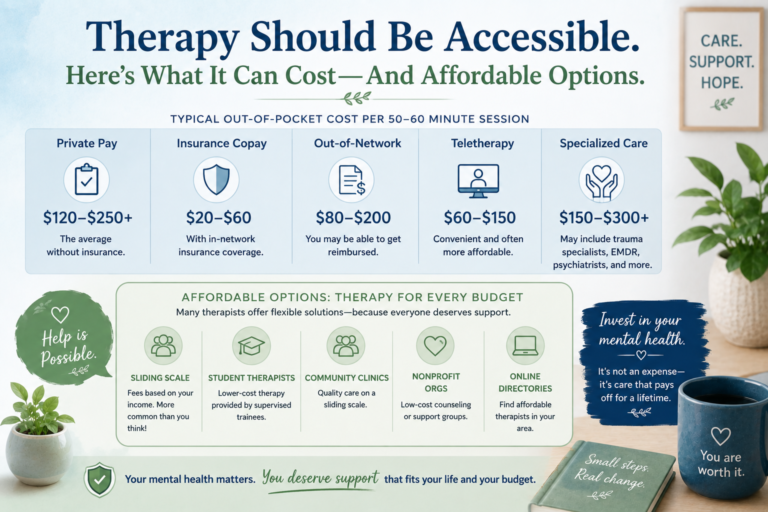
Cost depends heavily on your insurance and whether the therapist is in-network. With insurance, most people pay a standard copay or coinsurance per session, the same as any other specialist visit, once mental health parity rules apply (see our guide on whether insurance covers therapy for the full breakdown). Without insurance, CBT and similar therapies commonly run $100-$250 per session depending on location and provider experience, though sliding-scale and community mental health options exist for people who don’t have coverage.
How to Choose a Therapist for Anxiety
Look for a licensed clinician with experience treating anxiety, ask about their approach, and check that they accept your insurance or offer fees you can manage. Many people begin with a consultation call to see whether the fit feels right. If symptoms do not improve after a fair trial, discuss changing the approach or the provider.
What Insurance May Cover
Plans often cover therapy visits and sometimes psychiatric evaluations, but copays, deductibles, and limits vary. Ask your insurer about in-network providers and telehealth coverage before your first appointment.
Frequently Asked Questions
Do I need a referral? Some plans require one, so check.
How long does therapy take? It varies depending on the person and approach.
Can I use telehealth? Many plans cover it, so confirm.
If you or someone you know is in crisis, call or text 988 in the United States to reach the 988 Suicide and Crisis Lifeline.
This article is general information about insurance and is not medical, legal, or financial advice. Coverage varies by plan and state, so confirm details with your insurer.